Getting in the right mindset for treatment options

Unwelcome guest update

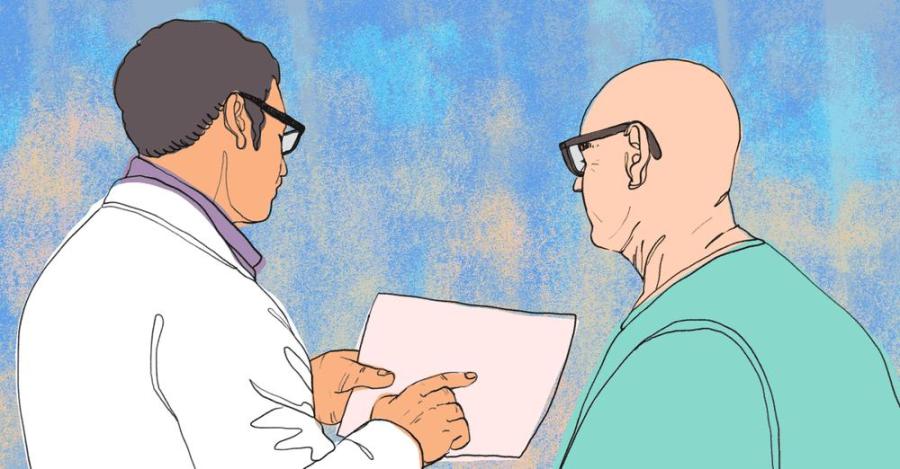
Picking the right treatment

Prostate cancer is one of the most common cancers among men in the United States. As a result, there has been a lot of research into prostate cancer treatments.

When your doctor tells you you’ve contracted this malicious disease and you’ve picked yourself off the floor, there are many therapies for you to consider. At the risk of telling readers what they already know, among the options are prostatectomy, where the prostate is removed; hormone therapy, which depletes testosterone on which the cancer thrives; and radiotherapy, which fires beams of energy at the cancer cells. There are other options such as cryotherapy as well.

How I selected a treatment

When I was diagnosed, I remember a nurse telling me that ultimately when I had all the facts, I’d have to decide between a combination of hormone and radiotherapy or having my prostate removed. I remember being bemused by this responsibility. Not being a doctor, how would I know what the best treatment would be? It was such a huge decision that was about to be taken by someone intrinsically involved, but without any of the insight required.

Read on

Trying to Dodge (But Also Deal With) Health Issues and Aging

Thirty years ago (can it really be that long?) I was working at ABC News and was a frequent visitor to Sarajevo during the Bosnian conflict. You may recall all the journalists stayed at the much-bombed Holiday Inn that had been built for the 1984 Winter Olympics. The Serb forces were ranged above in the mountains that surround the city. Outside the hotel was Sniper Alley. You had to drive at top speed to gain access to the underground car park before a sniper decided you might be an interesting target. It was an adrenalin rush, but not one I’m keen to repeat.

Now at the age of 68, I have a new Sniper Alley where bullets are traded for prostate cancer, heart attack, stroke, and shingles, just to name a few. Prostate cancer caught me, but so far I’ve managed to dodge the other bullets. Other friends and colleagues also cruising (or stumbling) down this new alley have not always been as lucky.

Read on…

A friend phones with bad news

I guess it had to happen sooner or later. An old friend got in touch to tell me he has prostate cancer. A biopsy confirmed he is now part of our unlovely club.

In some ways I’m surprised this hasn’t happened before. I’ve never made a secret of having contracted PC. I’ve blogged about it pretty much from day one, so it’s hardly surprising that a friend would seek me out. For all that, it was horrible news and brought me up short thinking about the day I was diagnosed. But it felt good to comfort someone else and to pass on what knowledge I have on this tricky subject.

It just seems unfair

I met Les through work nearly forty years ago and we’ve been friends ever since. He recently had to undergo a heart bypass, which restored him to rude health after several years of feeling quite frail. It just seems incredibly unfair that on top of that major operation, prostate cancer has now come calling. Not that there’s anything fair about cancer.

Les had been under the ‘watch and wait’ regime and then more recently ‘active surveillance.’ The medics confirmed the cancer has not spread outside his prostate, which is good news. His combined Gleason is 7 and his PSA under 5. I tried to reassure him that his cancer should be eminently treatable.

READ ON

Dodging cancer

Finally, the side effects are starting to fade away. It had been 18 months since my last hormone therapy shot and the hot flashes have almost completely disappeared. Body hair is now returning and so, too, is my libido.

All welcome events, but what would that mean for my PSA level? The consultation with the cancer center was due in a few days, and already the stats angst was starting to build.

Evidence the treatment was working

When the side effects were in full swing, I used to comfort myself that even though they were unpleasant they were evidence the treatment was working, and hot flashes seemed a relatively small price to pay when it comes to dodging cancer.

Testosterone is like catnip to cancer, and the main purpose of undergoing HT is to reduce its presence in the body to virtually nothing. This makes for unpleasant side effects but means the cancer has nothing to feed on.

Read on…

Pausing or Quitting Prostate Cancer Treatment

How do you know when it might be right to pause your cancer treatment? And an even bigger question to follow: How do you know when it’s time to quit treatment altogether? Before I continue, let me just say for those whom this might concern, I’m not about to be packed off on a one-way trip to a hospice; well, not anytime soon, I hope.

Considering pausing treatment

Pausing cancer treatment has been on my mind. As of my writing this, there’s nothing to pause, as I’m currently not undergoing any therapy. Soon I’ll be having my next PSA test, which rolls around every six months. For around the last 18 months, my PSA has stood at a highly desirable 0.03 and long may it remain that way.

The reason mildly-anxious thoughts have been occupying my mind is that my last hormone injection was way back in August 2020, and little by little the side effects have started to depart. My interest in sex is back, the hot flashes have gone, and something like normal life is starting to return. And you know what? I like it!

Read on…

Side Effects Sidelined

The treatment has stopped, now when are the side-effects going to quit?

It was a question I was constantly asking and now, as I have a little inside information, it’s a question people are starting to ask me. You may well recognize it: “When are the side effects going to stop?” “Side effects” is often preceded by a punchy Anglo-Saxon verb that’s unlikely to get past the diligent editors of this website. It’s often a heartfelt question, sometime almost a plea.

For the absence of doubt, the side effects I’m referring to are of course related to prostate cancer, which are brought on by the medical profession’s prodigious use of hormone and radiotherapy. As everyone reading this will know, they are used to shrink the tumors that may be lurking in our prostate and beyond.

Hormone therapy side effects

My experiences with these two regimes are clearly not as bad as some patients I’ve read about here and elsewhere. I’ve just dug out the paperwork I was handed prior to starting hormone therapy, and the potential side effects cover two pages of A4.

Read on…

Calling time

It’s annoying when they don’t call on time. Yesterday, at 4pm, I was expecting my six monthly check up call from the oncology department at Guys. A week ago, my blood had been drawn at the Cancer Centre to check my PSA level. Having been off any form of treatment for 18 months, was my PSA set to rise?

Following three years of hormone therapy and two months of radiotherapy my PSA had stood for more than a year at a highly acceptable 0.02. My prostate cancer was barely detectable. At 3.55 I was in a mildly anxious state waiting to find out my fate. By 4.40 no one had called so I took the dog out for a stroll to alleviate the stress.

Walking up the road, the phone goes, and I duck into a side road pulling Bucket after me to find out the latest instalment of Jim’s cancer capers. In short, the news is good. My PSA has increased, a small amount, and now stands at 0.23. The lady from the Cancer Centre described this figure as ‘magnificent’ which rather surprised me but hey, I now have magnificent cancer or rather lack of cancer. At diagnosis my PSA was 5.03.

This time they also measured my testosterone level which is not something I’d had done before. The hormone therapy reduces testosterone in men to something like zero which as you can imagine produces some irritating side effects. (hot flushes and loss of libido etc.) Testosterone is like catnip to cancer, hence the need to irradicate it for a while.

My testosterone level is now a plucky 18.6 which meant absolutely nothing to me until I learnt that in men the range is generally somewhere between 9 and 30. Of course I’ve no idea what my level was prior to my treatment but it seems to be in a relatively good place.

The brutal reality is that my PSA level will probably continue to rise, but it’s impossible to say how far and how fast. Once it hits 2.0 some of the dreary treatments may have to recommence but now, I have another six months until my next call and I’ll be putting cancer to the back of my mind. It’s something I’ve become rather good at. But next time Cancer Care at Guy’s, can you please respect the calling time.


How Can I Shift This Weight When I’m Hungry All the Time?

I’m one of those irritating people who has never had much trouble with their weight. I’ve been tall and skinny all my life. Even when middle age hit and I put on a few pounds, they were easy enough to take off again. So yeah, for a lot of people: Deeply irritating.

When I left school at eighteen, I didn’t exercise at all until I reached thirty, which coincided with the mid-80s when it was all Jane Fonda, aerobics and legwarmers. I’ve never played any competitive sport since leaving school, but I’ve paid regular visits to the gym, though my days of doing aerobics are long gone.

Weight gain after treatment

At the back end of 2017 I was diagnosed with prostate cancer, and the doctors indicated that a prostatectomy would not be a good treatment for me. My cancer was very near my bladder, and one slip of the surgeon’s knife might mean colostomy bangs and all kinds of other horrors.

Instead, I took the hormone and radiotherapy route, which has done what old age and a slowing metabolism failed to do. I’m now hungry most of the time. My “I’m full, I don’t need to eat any more” off switch seems to have been gummed up by the hormone juice, and now I could eat all the time. The pounds have piled on, and my slim 32-inch waist has expanded to something I don’t even want to mention. Read on…